

Do you love the beauty of orchids, but aren’t sure how to care for them? Orchids are known to need a bit more attention. However, by learning a few key methods, you can grow these beautiful flowers. This guide is perfect for both experienced and new orchid enthusiasts. It’s packed with essential tips for healthy orchids.
There are over 25,000 types of orchids, giving you a wide selection. The Moth Orchid (Phalaenopsis) is a great choice for beginners. Known for its bright and long-lasting flowers, it’s an eye-catching plant. Plus, when cared for properly, orchids can last up to 15 years. Secret is to know how to fulfill their special needs. This will let you enjoy their blooms for years.
Understanding Orchid Basics
Orchid Varieties and Epiphytic Nature
The orchid family stands out as the biggest and most varied among flowering plants, boasting over 30,000 types. This includes favorites like the Phalaenopsis (moth orchids), as well as the elegant Dendrobium and Cymbidium (boat orchids). Most orchids don’t grow in soil. Instead, they rely on trees or other plants for physical support.
Orchids that grow on other plants rather than in soil are called epiphytic. They’ve found ways to get water and nutrients from the air and the material around them. This includes absorbing these essentials from trees they latch onto. Therefore, caring for orchids at home means mimicking their natural habitat as best as we can.
Orchid Growing Requirements
Growing orchids at home means understanding their needs. Light, humidity, and temperature all play a big role, and these needs vary per species. In general, orchids love bright but indirect sunlight for about 6 hours a day. They also need humidity since they come from tropical areas. The best temperatures for orchids can be described as cool, intermediate, or warm, depending on the type.
Take Phalaenopsis orchids, for instance. They’re a hit for indoor spaces because they like intermediate light. Placing them on a bright windowsill, especially if it faces east or west, is perfect. They need humidity to hover around 50-70%, and their favorite temperatures range from 70-85°F during the day and 60-70°F at night.
It’s vital to know what your specific orchid type needs. Doing so ensures they not only survive but also bloom and grow in your living spaces.
| Orchid Variety | Light Requirements | Humidity Needs | Temperature Range |
|---|---|---|---|
| Phalaenopsis (Moth Orchid) | Bright, indirect light | 50-70% | 70-85°F (day), 60-70°F (night) |
| Dendrobium | Bright, direct light | 60-80% | 65-85°F (day), 55-70°F (night) |
| Cymbidium (Boat Orchid) | Bright, indirect light | 50-60% | 55-80°F (day), 45-65°F (night) |
Orchid Care Guide: Tips and Tricks
Keeping orchids healthy involves paying attention to a few important things. You need to choose the right soil and water them carefully. Knowing the orchid care tips lets you better appreciate these amazing flowers.
Orchid Watering: The Right Balance
Too much or too little water is often why orchids don’t do well. It’s best to water them just as the soil looks like it’s about to dry. If you water them too often, their roots might rot. But, if you don’t water enough, the leaves can get dry.
Orchid Fertilizing: A Nutrient-Rich Regimen
Orchids thrive when they get regular nutrients, especially when they are growing actively. A balanced, orchid-specific fertilizer helps them stay healthy and bloom brightly. Remember to fertilize as often as the package says, usually every one or two weeks.
Orchid Repotting: Timing is Everything
Every 2-3 years, orchids need a new pot, or if their old soil isn’t working well anymore. Make sure to use a light, well-draining orchid potting mix. This gives the roots the best chance to grow. How you replant them really matters for their future health.
| Orchid Care Aspect | Recommended Practices |
|---|---|
| Watering | Water just before the soil dries out completely, being careful not to overwater |
| Fertilizing | Use a balanced, orchid-specific fertilizer and apply weekly or bi-weekly during the growing season |
| Repotting | Repot every 2-3 years, using a well-draining orchid potting mix |
Using these orchid care tips will help you grow beautiful, healthy orchids. They will thank you with gorgeous blooms for years to come.
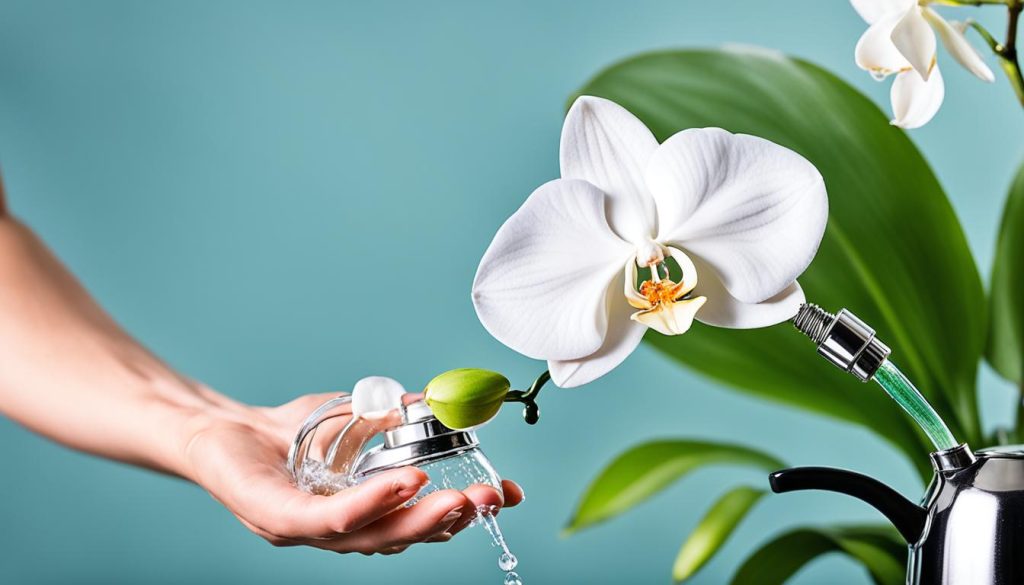
Providing the Right Environment
To keep your orchids healthy and growing, the right mix of humidity, air, and temperature is key. Learn what each orchid type needs. Then, you can set up the perfect spot for your plants to blossom.
Humidity and Air Circulation
Orchids love a humid atmosphere. Using a pebble or humidity tray can boost the air’s moisture around them. This is good for the plants, but remember, air should never be still. Stagnant air invites fungi. A fan gently moving air can save your plants from such infections by keeping the air fresh.
Temperature Considerations
Orchids come in cool, intermediate, and warm types, each with its own temp preferences. Cool-growing orchids like it between 60-70°F in the day and cooler at night. Intermediate-growing orchids do best in 70-80°F by day and a bit cooler at night. Finally, warm-growing orchids thrive in temperatures that can hit 90°F during the day and 70°C overnight. Getting the temperature right is key for your orchid’s health and flowering.
| Orchid Type | Daytime Temperature | Nighttime Temperature |
|---|---|---|
| Cool-growing Orchids | 60-70°F | 50-55°F |
| Intermediate-growing Orchids | 70-80°F | 55-65°F |
| Warm-growing Orchids | 80-90°F | 65-70°F |
By meeting the orchid humidity, air circulation, and temperature needs, you’ll create a space where your orchids will flourish. This applies whether you have orchid cool growing or orchid warm growing types.
Repotting and Pruning Orchids
It’s key to take good care of your orchid as it grows. Ensuring it has the right care means it will stay healthy and bloom brightly. This care includes repotting and pruning as needed.
Repotting Orchids
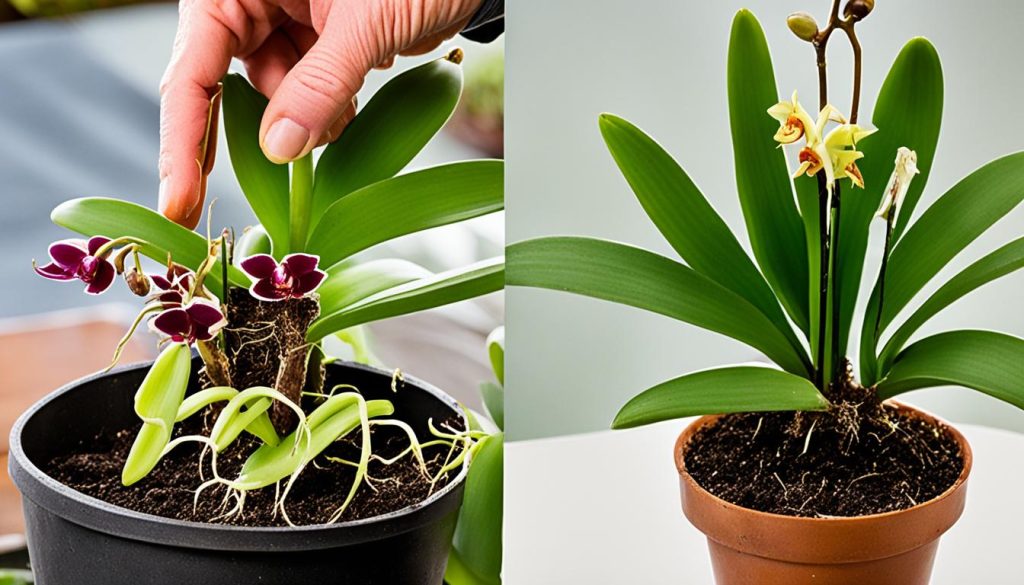
Repot your orchid every 2-3 years as it gets bigger or the mix breaks down. To do this, take the plant out gently. Then, remove the old mix from the roots. Finally, put it in a bigger pot with fresh, orchid-specific potting mix.
- Remove dead or damaged roots when repotting.
- Wait a bit before watering the repotted orchid. This helps the plant adjust to its new space.
- Repot in late spring or early summer, after flowering.
Pruning Orchids
Cutting off dead flower spikes is a big part of keeping orchids healthy. It helps them bloom more in the future. Some types might also need dead leaves and roots trimmed.
- Cut the top of monopodial orchids, like phalaenopsis, to control height and make new plants.
- Divide sympodial orchids, such as cattleya, to get more growth.
- Cut out black or brown parts of leaves to stop disease from spreading.
Timing for pruning can change with each orchid. Watching for new leaves and roots helps pick the best time to prune or repot.
| Orchid Variety | Pruning Recommendation |
|---|---|
| Phalaenopsis | Trim flower spikes after blooming to encourage new branches of flowers |
| Oncidium | Trim flower spikes after blooming to extend flowering period |
| Dendrobium | Trim flower spikes after blooming to encourage new branches of flowers |
Regular orchid repotting and pruning keeps your flower healthy. It will continue blooming beautifully for years.
Troubleshooting Common Orchid Problems
Lovers of orchids need to know how to tackle common issues. Things like pests, bud drop, and leaf problems can happen. Learning about the reasons behind these issues and how to fix them keeps orchids healthy.
Orchid pests like aphids and mealybugs are a real annoyance. Yet, using a cotton swab with isopropyl alcohol is a great way to get rid of them. Also, keeping a close eye on your plants and being proactive can stop pests from spreading.
Bud drop is something many orchid owners face. It can come from overwatering, changes in temperature, or low humidity. To counter this, watch your orchid’s space carefully and make adjustments. If you see your plant’s leaves looking dry, it might need more water or humidity.




Leave a Reply