

Have you ever wondered how much rainwater your home could capture? Rainwater harvesting is simple and effective. It helps conserve this important resource and cuts down on using municipal water. By using water barrels or more advanced systems, you get several benefits. These include saving money and having a sustainable water source for your plants and more.
Rainwater harvesting is the process of collecting rain for later use. In this guide, we’ll cover the basics of rainwater collection and its benefits. We’ll also look at what you need for a good system. Get ready to learn how to make the most of rain and keep your water use secure.
What is Rainwater Harvesting?
Defining Rainwater Harvesting and Its Importance
Rainwater harvesting is the simple act of collecting rainwater. People gather it, usually from the roof. It’s a way of saving water and being kind to the environment. This method is very helpful in places where there isn’t much water.
This can be very easy, like using a big barrel to catch water from a pipe. Or it can be more complicated, like a hidden tank that can supply a whole house. Both ways, it helps save water and makes us less dependent on the usual water supply.
Aside from saving water, rainwater collection is good for the Earth. It keeps our land from getting washed away by rain. It stops dirty water from reaching our rivers and lakes. Also, it helps not overload our cities’ drainage systems. So it’s a smart way to manage water.
In some places, like in parts of the US, catching rain to use later is a must. With climate change and more people, water is getting scarce. So, using rainwater helps us have enough water all year. It’s a great way to handle the water challenges we face now.
| Rainwater Harvesting Statistics | Value |
|---|---|
| Rainwater Yield per 1,000 sq ft of Roof | 600 gallons (from a 1″ rain event) |
| Typical Rain Barrel Capacity | 60 gallons |
| Cistern Capacity | Larger systems for higher water demands |
| Stormwater Runoff Reduction | Helps control contamination and improve water quality |
| Rainwater Collection Limits in Colorado | Up to 110 gallons in rain barrels on residential properties |
Benefits of Rainwater Collection
Rainwater collection has many advantages. It helps with water conservation, is good for the environment, and supports sustainable water use. It uses free, clean water from nature to help your home and community. It makes a big difference.
Collecting rainwater can lower your use of city water. Rainwater is everywhere and can be used for many things. It’s a great choice, especially where water is low. This helps ease the pressure on local water supplies during dry times.
Another plus is the chance to control your water’s purity. Rainwater is free from chemicals like chlorine, unlike city water. This makes it ideal for plants, gardens, and washing cars. It’s also more balanced and rich in nutrients. So, it’s great for your green spaces.
- Reduced water bills and cost savings: Using rainwater for gardening cuts your need for city water. This means lower bills and saving money in the long run.
- Eco-friendly water practices: Harvesting rainwater is good for the earth. It decreases runoff, lessening pollution in our waterways.
- Improved drought preparedness: A rainwater system ensures water availability during dry spells. It helps you and your landscape stay healthy.
Choosing rainwater collection goes beyond saving money. It’s a step towards better water usage for all. It helps protect our water, making our communities stronger and more eco-minded.
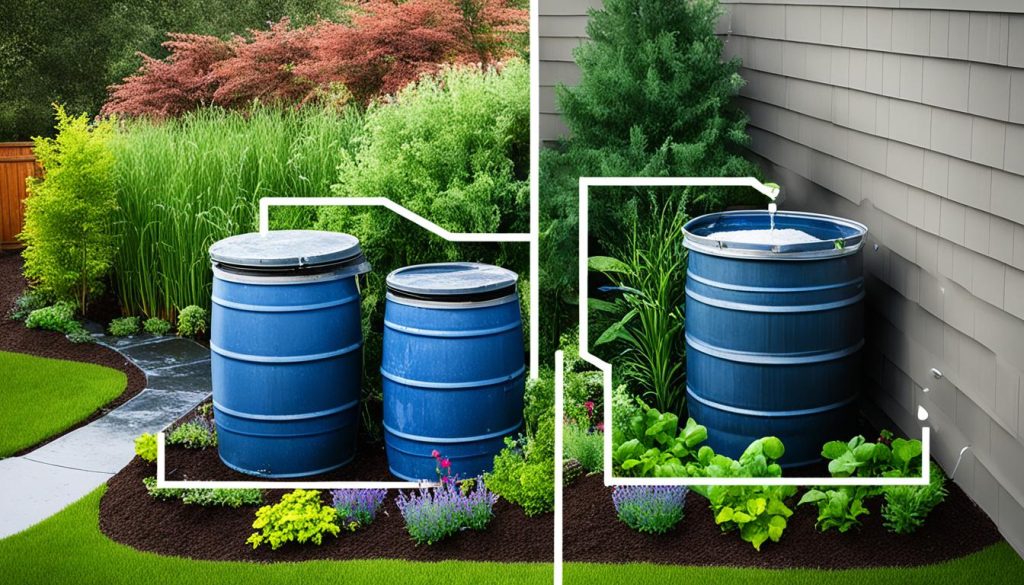
Water Barrels and Rain Collection
Collecting rainwater helps you use less city water. It makes you more self-sufficient. Water barrels are key to this. They catch rain from the roof and store it. These barrels are often recycled.
Making your own rain collection system is easy and many people do it. You can also set up more complex systems. These might have big storage tanks and pipes to collect from more areas. This way, you can water your garden or even your whole house with rainwater.
| Product | Price | Capacity | Features |
|---|---|---|---|
| Graf Mondo 137 Gallon Rain Barrel with 1 HP Pump and Filter Package | $519.95 | 137 gallons | Includes a 1 HP pump and filter for easy water access and filtration |
| Graf Mondo 137 Gallon Rain Barrel with 1/2 HP Pump and Filter Package | $449.95 | 137 gallons | Includes a 1/2 HP pump and filter for water access and filtration |
| Graf 350 Gallon Top Tank | $619.95 | 350 gallons | Large capacity tank for greater rainwater storage |
| Graf 430 Gallon Herkules Tank | $789.95 | 430 gallons | Largest capacity tank in the lineup, ideal for whole-home rainwater harvesting |
No matter how simple or complex, rainwater systems offer a smart way to get water. They let you use less city water and pay lower bills. Plus, you help the environment.

Components of a Rainwater Harvesting System
Building a good rainwater harvesting system needs key parts that work together. These parts collect, store, and share rainwater. Every component, from the roof to the pipes, is crucial for success and eco-friendly water collection.
Essential Elements for Efficient Rainwater Collection
A reliable rainwater collection system must have several key components:
- Roof Surface: It is where rainwater first collects. The roof needs to be smooth and tough. This stops the water from getting dirty with materials like metal, tile, or strong asphalt shingles.
- Gutters and Downspouts: These parts direct water from the roof to the storage tank or cistern.
- First-Flush Diverter: This important part cleans the water by removing the first batch. That first flow is often the dirtiest from the roof.
- Storage Tank or Cistern: Rainwater is kept here until it’s needed. Tanks can be big or small, depending on how much water you plan to collect.
- Distribution System: With a pump or without, it sends water where you need it. You can use this water for watering plants, washing, or even drinking after treating it.
| Component | Description | Typical Size Range |
|---|---|---|
| Rain Storage Tanks | Fabricated from high-density polyethylene (HDPE) or metal (stainless steel, galvanized steel) | 90-100 gallons to 100,000 gallons |
| Water Pumps | Submersible pumps commonly used in rainwater harvesting systems | Varies based on system requirements |
| Catchment Area (Roof) | Roof surface material affects water volume and quality | Varies based on roof size |
| Gutters and Downspouts | Preferred materials include metal and synthetic, often with screen covers | Varies based on roof size and system design |
| First-Flush Diverters | Discard the initial volume of rainfall that may contain contaminants | Varies based on system design and rainfall patterns |
To have a system that works well, these parts must do their job. They ensure you have water when you need it for many uses.

Calculating Your Rainwater Collection Potential
Finding out how much rainwater you can collect is key. This depends on your roof size and how much rain falls in your area. The more roof area you have, the more water you can collect.
A basic way to figure this out is by using this formula: 1 inch of rain on 1 square foot of roof equals 0.623 gallons. If you know your roof’s square footage and the average yearly rain amount, you can guess how much rainwater you might collect. This water can be used for many things, like watering your garden or flushing toilets.
This knowledge is vital for picking the right rainwater system size. It also shows you how much water you can save by collecting rain. A good system helps save water and supports your home during dry times. It’s a smart move for better water use at home.




Leave a Reply