

Succulents and cacti stun gardeners everywhere with their beautiful shapes and tough nature. They can grow well even in tough conditions. How can you make sure these plants do well in your home or garden? Follow the expert tips in this guide to grow robust and lively succulents and cacti.
Ready to make your place look amazing with little effort? This guide will show you how to care for succulents and cacti. You’ll learn to choose the best spot and how to grow new plants from the old ones. Soon, you’ll be skilled at taking care of these eye-catching, low-water plants.
Understanding Cacti and Succulents
Cacti and succulents are beloved by many worldwide. They catch the eye with unique features. Let’s dive into what makes these plants special.
Characteristics of Cacti
Cacti come in almost 2,000 different types, mostly from the Americas. They don’t have leaves but instead use areoles for many things. Areoles help cacti grow spines, flowers, and new parts.
Cacti thrive in dry places thanks to their spines and water-storing ability. They use spines to keep animals away and hold onto moisture.
Characteristics of Succulents
Succulents are part of a large plant group, which includes cacti. They have thick parts that store water. This is why they’re great at surviving in dry places.
Unlike cacti, succulents have various shapes, hues, and sizes. Some have spines, like the prickly pear. Others, like jade plants, have soft leaves. This variety makes them excellent for both indoor and outdoor settings.
It’s essential to know about cacti and succulents for proper care. By understanding how they live, we can make beautiful, easy-to-care-for plant arrangements. This way, we celebrate the beauty and strong nature of these plants.
Choosing the Right Environment
Cacti and succulents are tough plants, but they need the right environment. From light to ventilation, knowing their needs is vital. This knowledge is key to growing them successfully.
Light Requirements
These plants love being in bright sunlight. Place them in a south-facing window or give them artificial light for 14 to 16 hours daily. But, don’t let them bake in direct midday sun. This could harm their skin. Some, like the Schlumbergera, do well in a bit of shade. They like this because that’s what they’re used to in their rainforest homes.
Temperature and Ventilation
Cacti and succulents enjoy warm days and cool nights, especially in fall and winter. Keep daytime temperatures between 70-85°F (21-29°C) and nights cooler, 55-65°F (13-18°C). Good airflow fights off fungus, more so in the heat. Make sure your plants can breathe well to stay healthy.
| Characteristic | Cacti | Succulents |
|---|---|---|
| Light Requirements | Bright, direct sunlight for 14-16 hours per day | Bright, direct sunlight for 14-16 hours per day, some species prefer semi-shade |
| Temperature | Warm, 70-85°F (21-29°C) during the day, 55-65°F (13-18°C) at night | Warm, 70-85°F (21-29°C) during the day, 55-65°F (13-18°C) at night |
| Ventilation | Excellent air circulation to prevent fungal issues | Excellent air circulation to prevent fungal issues |
By managing lighting, warmth, and air well, you’ll make a great home for your cacti and succulents. Tailoring their environment keeps them strong and colorful over time.
Potting and Soil Preparation
Potting Mix for Cacti and Succulents
Cacti and succulents need the right potting mix for good health. To avoid root rot, choose a dry mix. It should be half potting soil and half sand or grit. This keeps the soil clean and lets water drain well. Always use pots that can let water out. Don’t use normal potting soil for these plants; it’s too moist.
Cacti prefer a mix that’s mostly mineral. Try 60% minerals like pumice or grit with 40% soil. This mix copies their dry, hot home. Some cacti, like holiday cacti, need a special mix. Use 2 parts pumice and 1 part coarse bark for them.
To make your own mix for succulents, use 1 part organic and 2 parts minerals. Good organics include compost or pine bark. Minerals can be sand or perlite. This mix helps keep moisture levels right and drains well. You can also buy special mixes for cacti and succulents. They cost between $4.58 and $5.99 for an 8-quart bag.
Using the right mix is vital for the health of your plants. It helps them grow strong. With the right soil, your cacti and succulents will do well in pots.
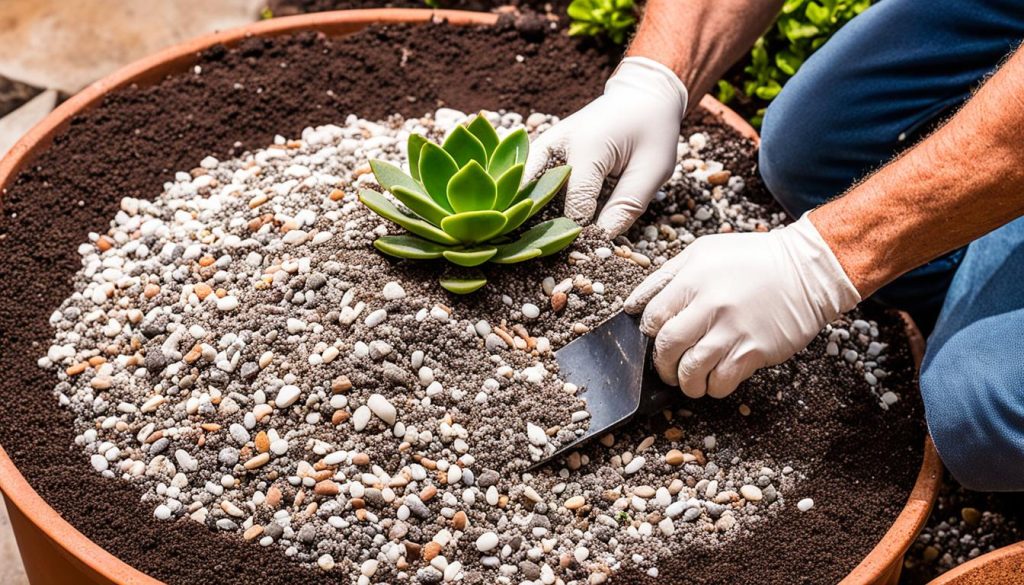
How to grow succulents and cacti
Watering is key for cacti and succulents health. In the active season, water when the soil is dry. Then, allow any extra water to drain. Cut back on watering in the fall and winter.
Use rainwater if you can. This is because tap water might build up minerals over time.
Feed your plants monthly with a balanced, cactus food. Mix the food at half strength. Don’t give them too much food, though. They don’t need a lot to stay healthy.
Cacti are part of the Cactaceae family but are also succulents. They have unique structures called areoles. This makes them different from other succulents. Cacti rely on spines for protection and reducing water loss. They do photosynthesis in their stems, which helps them live in dry areas.
Cacti need less water and can handle brighter light. Not all succulents and cacti play well together. It’s smart to check before mixing them. Some, like Snake plants, need less light and more water than cacti.
These plants like being in pots and don’t need to change homes often. They should come inside during winter if they can’t survive the cold. Make sure their pots have holes at the bottom. This lets water out so the soil doesn’t get too soggy.
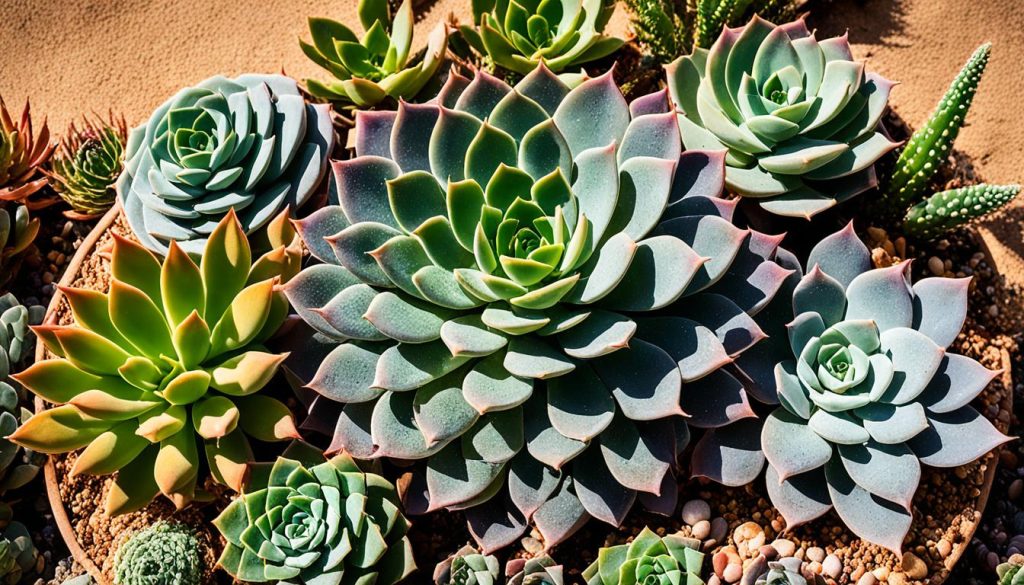
Use special cactus soil or mix sand in your dirt for good drainage. Succulents do best in soil that’s a bit sour, with a pH of 5.5-6.5. Remember, too much water is the most common reason these plants die.
Succulents use more water in spring and summer. The amount changes based on the weather. When it’s very hot, they need water less often. In cool and cold times, give them water even less frequently.
Feed your plants when they’re growing, but stop in the late fall and winter. Use food made for cacti and succulents. If your plants aren’t growing well, they might need more nitrogen.
Propagation and Repotting
Growing your own succulents and cacti is very rewarding. Propagation helps you grow more plants. You can do this from stem cuttings, leaves, or offsets. It’s simple and brings impressive results.
Propagating Succulents and Cacti
- Not every leaf or stem will grow into a new plant. Some might wither, while others grow well.
- Even leaves started on the same day can have different results. This shows how varied the process can be.
- When propagating, water leaves lightly until they show roots or new growth. Then, give them a good soak weekly or when the soil dries. It’s best to mist leaves daily to avoid over-watering.
- Let stems or leaves dry and callous before planting to avoid rot.
- You don’t always need rooting hormone for successful propagation. This can save you money.
Repotting Succulents and Cacti
- Replant your succulents and cacti in the spring as they start to grow actively.
- Take the plant out of its old pot carefully. Trim any roots that look damaged.
- Put the plant in a new, slightly larger pot with fresh, fast-draining soil.
- Don’t water it for a few days after replanting. This helps prevent rot.
By using these propagation and repotting tips, you can grow your collection. These plants are tough and beautiful.
Common Succulent and Cactus Varieties
There are many beautiful succulents and cacti to grow. Popular types include the jade plant, aloe vera, and Christmas cactus. They need well-draining soil and lots of sunlight to grow well. Each type has its specific care instructions.
Jade Plant
The jade plant is known for its thick leaves and tree-like shape. It can get pretty tall, but it usually stays under a foot indoors. Jade plants do well in places with not a lot of light, which is great for many homes.
Aloe Vera
Aloe vera is famous for its gel-filled leaves used in skincare. It can grow up to 3 feet high and wide. This plant likes lots of light, but it can also do okay with just a bit of light. Remember to water it regularly.
Ponytail Palm
The ponytail palm looks like a small palm tree with a big bottom and thin leaves. It stays small inside and likes lots of sunlight and well-draining soil. This plant is more like a palm tree than a typical cactus.


Leave a Reply