

Ever thought about having a Mediterranean garden in your yard? These outdoor spaces capture the charm and vibe of sunny places. They provide a peaceful escape from daily life’s noise and rush.
Mediterranean gardens are known for their unique style. In this piece, we’re going to look at the essential features and how to make your own. We’ll cover the most critical aspects and plant choices that fit your weather and tastes.
Ready to learn the secrets of crafting a beautiful Mediterranean garden? Let’s get started on this exciting journey.
Defining the Mediterranean Garden Style
The Mediterranean garden style reflects a relaxed outdoor way of life by the sea. These gardens offer shady spots from the hot sun and include refreshing water features. They also provide comfy outdoor areas. Drought-tolerant plants, gravel, and stone are at the center of these gardens. They replace the need for lots of water and make a beautiful, easy-to-care-for scene.
Key Elements of a Mediterranean Garden
Mediterranean gardens often have the following key parts:
- Drought-tolerant plants needing 6-8 hours of sun each day
- Plants with good drainage to prevent root rot in winter
- Waterwise succulents like agave and sedum
- Shade-providing trees such as olive trees and palms
- Fragrant plants including lavender and jasmine
Sensory Experiences in a Mediterranean Garden
The Mediterranean garden is meant to please all senses. It uses bright colors, exotic fabrics, and decorative tiles to look stunning. Jasmine, lavender, and rosemary fill the air with a beautiful smell. The sound of water from features brings peace. It creates a rustic, casual look that feels timeless and part of nature.
These gardens have shady spots like pergolas where you can relax and escape the sun. They have places for people to sit made of stone or wood. These areas are perfect for chilling out or hosting friends.
A Mediterranean garden becomes an inviting place by having these elements. It’s a tribute to the area’s special climate and way of life.
Selecting the Right Site and Preparing the Soil
Creating a Mediterranean garden starts with picking the right spot and getting the soil ready. These plants love lots of sunlight and need soil that drains well. They don’t do well in wet soil, which can cause their roots to rot.
If your soil holds too much water, you might want to consider raised beds or a rock garden. To help the drainage, mix in gravel, sand, or perlite with your soil. Remember, Mediterranean plants don’t need a lot of nutrients in the soil, so don’t add too much organic matter.
Garden designer James Basson says evergreen shrubs are key in a Mediterranean garden. They last a long time and keep the garden looking good. He also points out that these plants need proper care to stay beautiful.
Plants in a Mediterranean garden bloom at different times. Acacias and citrus trees start in late winter. Then, in spring, you’ll see crocuses, grasses, and cistus flowers. Summer brings bougainvilleas, pelargoniums, and oleander. Popular choices are olive trees, citrus, lavender, rosemary, and palms.
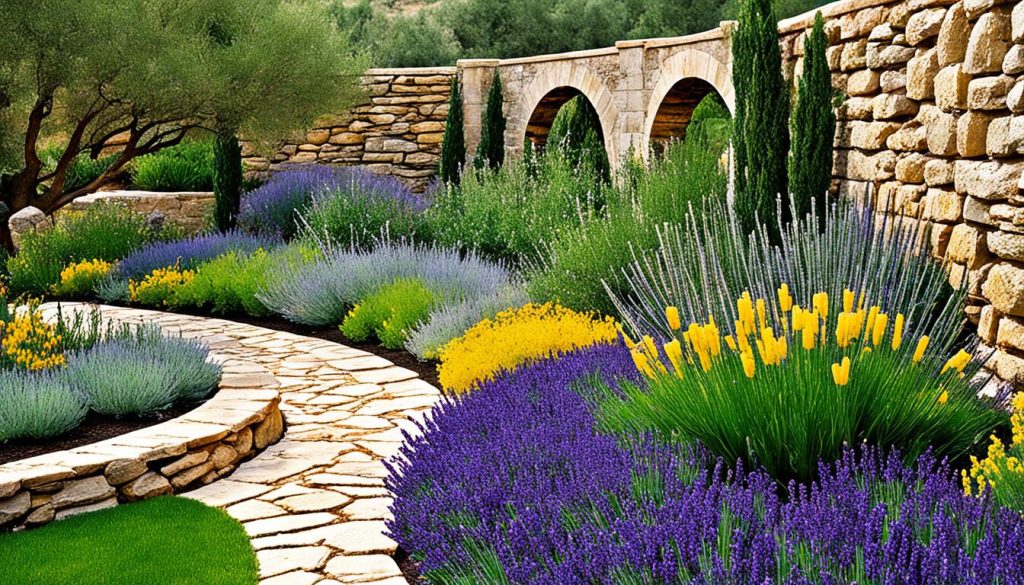
Peter Jones from RHS Wisley notes that plants in Mediterranean gardens like well-drained soil and lots of sun. They don’t need rich soil. Design usually has warm-colored paving and terraces for sitting outside. Gravel helps keep the plants healthy by reducing competition.
How to Design a Mediterranean Garden
Design your Mediterranean garden with lots of shade and cooling. Add in pergolas, courtyards, or big shade structures. They’re great for staying out of the sun and make your garden look beautiful.
Add water features like fountains, birdbaths, and pools. They bring calmness to the garden with the sound of flowing water. This makes your garden a peaceful place to be.
Incorporating Shade Features
Shade is vital for a welcoming Mediterranean garden. Try a pergola or shade structure over your seating or walkway. You can grow plants like bougainvillea or wisteria on them, making your garden stand out more.
Including Water Features
Fountains, pools, and birdbaths are key in Mediterranean gardens. They make your garden feel calm and cooler. The sound and sight of water help set a relaxing mood.
Creating Outdoor Living Spaces
Living outdoors is important in the Mediterranean lifestyle. Your garden should have shaded spaces for dining, relaxing, and having fun. Use gravel, stone, or terracotta pots for a natural, matching look.
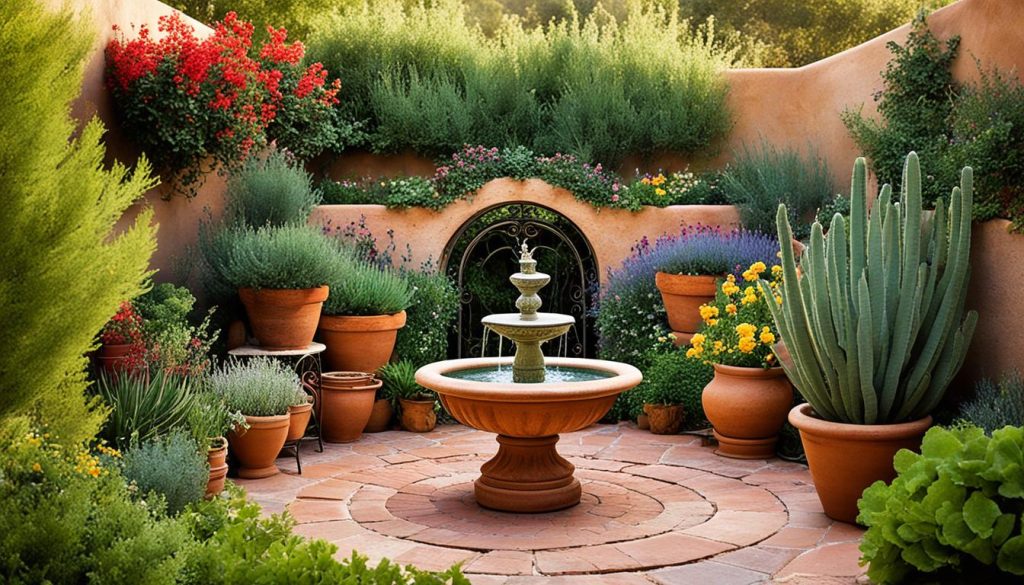
Use these elements to build a welcoming Mediterranean garden. It’ll be a relaxing, beautiful space that captures the warmth of the Mediterranean.
Choosing Plants for a Mediterranean Garden
When making a Mediterranean garden, picking the right plants is key. These gardens need plants that don’t need a lot of water and love the sun. Plants like boxwood, teucrium, and myrtle are great choices. So are plants with pretty leaves, such as silver artemisia and lamb’s ear.
For adding beauty to walls and other structures, think about using vines. You could use bougainvillea, trumpet vine, and jasmine. Clipped hedges and topiaries help keep your garden looking good all year. They add interesting shapes and patterns.
Adding trees like olives, Italian cypress, and different palms can make your garden taller and cooler. Succulents and citrus trees add variety. Ornamental grasses and ground covers can fill in the lower spots. By choosing the right plants, your Mediterranean garden will look vibrant and be easy to care for.


Leave a Reply