

Ever thought about turning a city’s concrete jungle into a thriving garden? Urban gardens do just that. They bring life into the heart of cities. These green places look great. More than that, they help create sustainable communities and bring fresh, healthy food to everyone.
They also help us feel closer to nature. Imagine your city full of fresh fruits and veggies. This is the promise of urban gardens. They bring new life to our cities and help the planet too. Read on to learn more about urban agriculture and its many benefits.
The Rise of Urban Agriculture
More and more people in cities want to get back to nature and control where their food comes from. This has led to a big increase in urban agriculture. Now, you can find fresh produce growing all around city centers, like on rooftops and in vertical farms. These new ways of farming are turning cities into green spaces.
Cultivating Fresh Produce in the Concrete Jungle
City farms now provide 15 to 20 percent of the world’s food, and this number keeps going up. For cities to grow all the food they need, about 30 percent of their land would have to be used for farming. This kind of farming not only makes healthy food more available, but it also cuts down on the pollution caused by shipping food from far away.
Local Food Production for Sustainable Communities
Urban agriculture is key for creating cities that can stand the test of time. It’s not just about being a popular thing to do now. This way of farming can help cities become more green and self-sustaining. Depending on the rules in an area, it’s possible to grow fruits, veggies, eggs, goat milk, and honey right there in the city.
People who get into city farming often change how they eat, making choices that are better for the planet. By growing their own food, they might eat less meat, which is good for cutting down on pollution. Urban farms also play a big part in keeping cities cooler by stopping them from getting too hot. This happens when there are lots of plants and trees around, creating shade and a cooler environment.
However, not everything is easy with city farming. It can be really expensive to find land in the city for farming. Also, many cities don’t have clear rules or support for urban farmers. This makes it harder for city farming to grow as much as it could.
But, things are looking up for the future of city farming. Places like Chicago, Sacramento, and New York are starting to support urban farming more. Universities and research centers are also giving city farmers helpful advice and support. As more and more city folks see the good in growing their own food, we’re likely to see even more urban farming. This trend is turning empty city lots into beautiful, useful spaces that make cities better places to live.
Benefits of Urban Gardens
Urban gardens help city dwellers in many ways. They offer fresh, nutritious food. They also make city life a bit greener. Growing your own fruits and veggies means you get to eat healthy, fresh food often. This way, it’s also usually cheaper than buying it from a store.
These green spaces are not just for food. They’re great for exercise, reducing stress, and making you feel good. Activities like gardening can really boost the health and happiness of people who live in cities.
Improved Access to Nutritious Food
Before COVID-19, Americans spent a lot of time commuting. Now, with Community Gardens and Green Spaces, they can produce their own food. This saves time and energy, making it easier to get fresh food that’s good for mental health.
Studies also say gardening in the city can make you feel better. Just 5 minutes in a green area can improve your mood a lot. It’s good for the mind and body, and it connects you with the earth.
Reconnecting with Nature in the City
In cities, green spots are very important. They give people a break from city life. These Green Spaces are perfect for exercise, chilling out, and feeling closer to nature.
A study found people heal faster after surgery if they can see green. Urban gardens not only cool the city and clean the air, but also make people healthier and happier.
Urban gardening comes in many forms. From small container plants to big community projects, it’s all about putting nature back in cities. This is good for eating healthy, feeling well, and taking care of the earth.
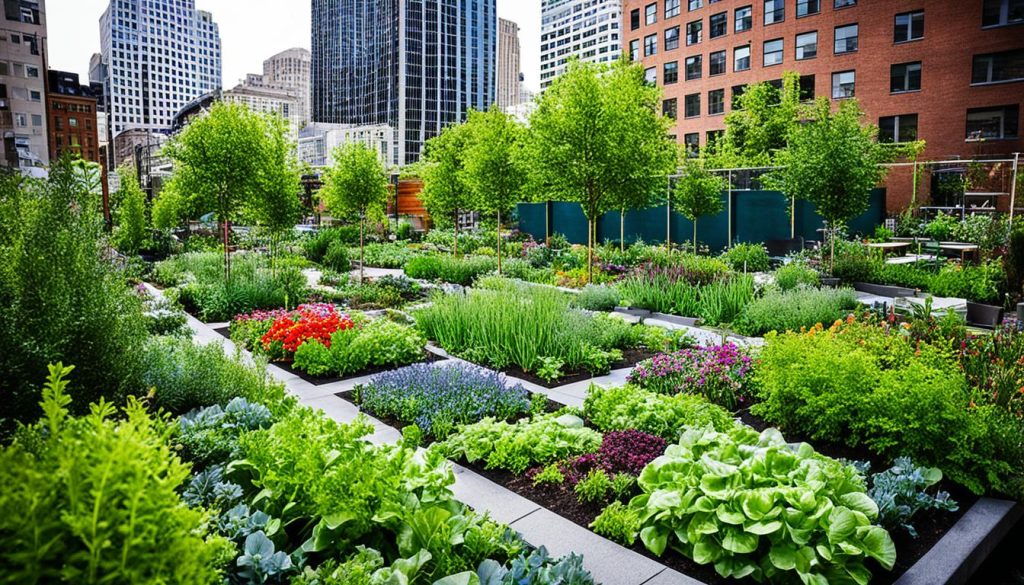
Cities are realizing the advantages of Community Gardens and urban farming. They are turning empty spaces into lush Green Spaces. This lets urban dwellers enjoy nature more, stay healthy, and help the planet.
Urban Gardens
Urban gardens are changing how we use empty city spaces. They take places like vacant lots and rooftops and turn them into productive Edible Landscapes. This provides fresh, healthy food and looks beautiful.
These gardens aren’t just about growing food. They bring people together and help the environment. A study in California found that urban gardens grow more types of plants in less space than farms in the countryside.
Urban gardens do more than grow food. They help wildlife, offer green hangouts in busy areas, and improve people’s health. They give folks access to fresh, good-for-you food, which can boost both their mental and physical health.
With more people living in cities, urban gardens are key for a healthy, sustainable future. They turn empty spots into places that benefit everyone. This approach offers many gains for society, the environment, and the economy.
| Metric | Value |
|---|---|
| Urban farms and gardens currently provide about | 15%-20% of the food supply |
| It is estimated that by 2030, approximately | 60% of the world’s population will live in cities |
| The Milwaukee Grows Garden Network (MKE Grows) started with | 5 gardens in 2000 and has now expanded to over 80 community gardens |
| Groundwork Milwaukee’s Junior Young Farmers Program allows | elementary and middle-school-aged youth to learn gardening skills |
To make the most of urban gardens, we need to do a few things. This includes getting the community involved, making partnerships, and finding ways to keep the projects funded. By tackling these issues, cities can create gardens that not only grow food but also support their people in many ways.
Community Engagement Through Gardening
Urban gardens go beyond growing food. They help communities come together and feel empowered. By working on green spaces, people build ties with each other and their surroundings. Community gardening improves areas that are lacking, offering spots for meeting, learning, and gaining new skills.
Working together in gardens creates a sense of community pride. It makes people feel they own and improve their neighborhoods. Studies show these gardens not only connect people but also boost involvement in community decisions.
Fostering Connections and Empowering Neighborhoods
Research revealed many reasons why folks get into urban gardening. It found that working across different groups is key for lasting green programs. Strong community projects need everyone sharing ideas and tasks.
Building community skills and making gardens open to all is vital for their success. The research pointed out that empowerment and solidarity are key. Good leaders are critical for keeping urban gardens going strong.
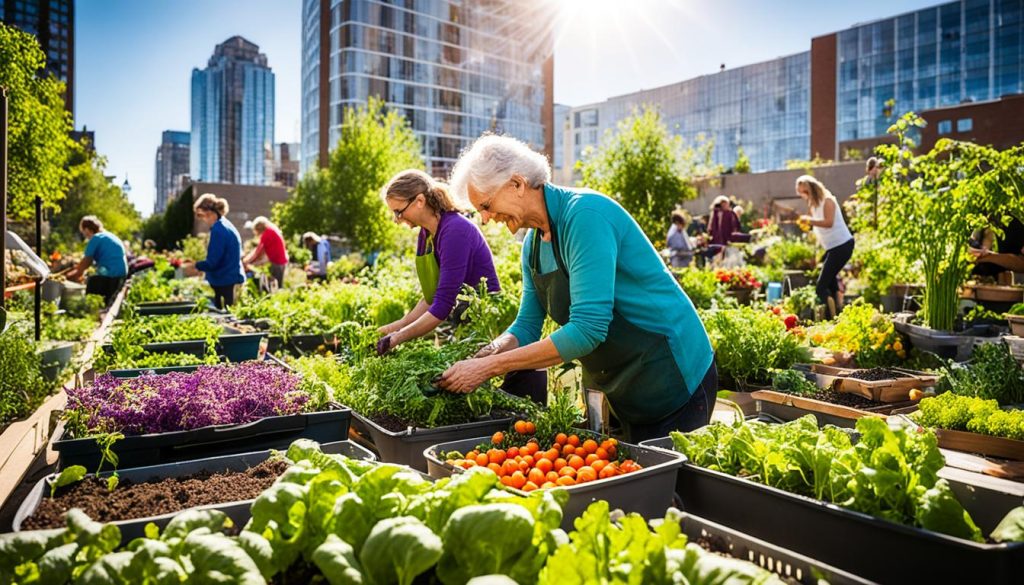
The study’s insights can guide how we set up urban gardens. By promoting connections and empowerment, these projects change cities for the better. They make our living areas more dynamic, stable, and welcoming for everyone.
Innovative Urban Gardening Techniques
Urban gardeners are using unique methods to grow food in packed cities. They are turning to vertical farming and permaculture. These methods help create a more sustainable and food-secure future in cities.
Vertical Farming and Rooftop Gardens
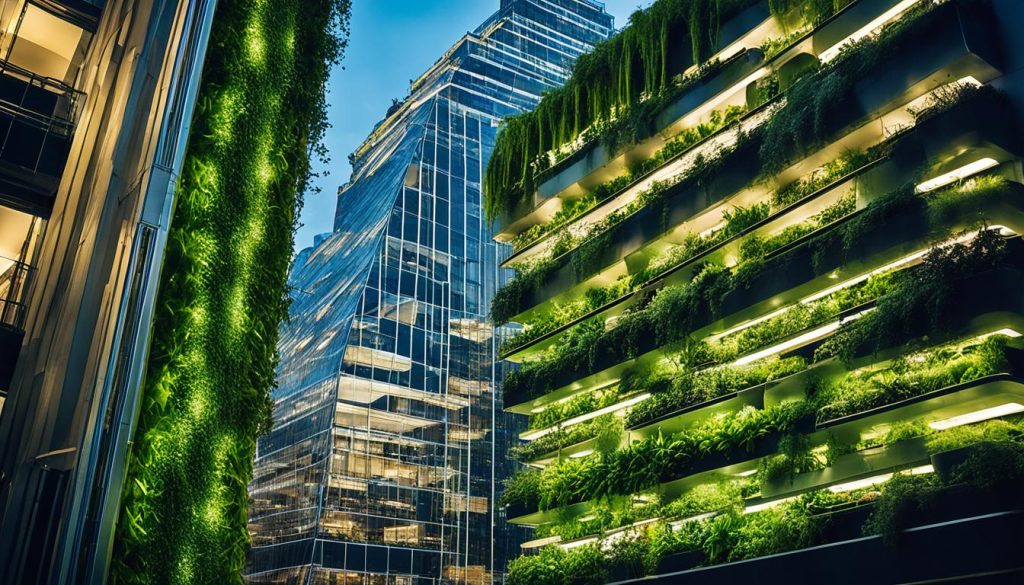
Vertical farming stacks plants to save space. It uses less water than traditional farming. This can produce 400 times more food in small areas.
Rooftop gardens turn wasted space into green areas. They use smart technology for plant growth. This improves air quality and makes more room for plants and animals.
Permaculture Principles for Sustainable Gardening
Urban gardeners use permaculture to be self-sufficient. They plant in a way that helps everything grow better. This needs less work and helps the garden be more resistant to problems.
Technology is also changing urban gardening. Apps and special planters are making it easier. As cities grow, these new ideas will be very important for food and nature in cities.
| Technique | Description | Benefits |
|---|---|---|
| Vertical Farming | Growing plants in stacked layers or vertically |
|
| Rooftop Gardens | Cultivating gardens on building rooftops |
|
| Permaculture Principles | Designing self-sustaining, regenerative gardening systems |
|
Overcoming Challenges in Urban Agriculture
The benefits of urban gardens are clear, but there are tough challenges. Finding the right land, enough water, and getting funding is hard, especially in busy places. Rules and policies, like where you can build and lack of city help, can stop projects from growing. Also, it’s expensive to build things like irrigation systems and storage places you need.
To make urban gardens work well, we need everyone to work together. This means city leaders, community groups, and planners must join forces. They have to face problems with Policy and build better Infrastructure for Urban Agriculture.
Addressing Land and Water Constraints
Many cities have little land for growing food, and many people want to use it. Being smart with space, like using rooftops and growing up in buildings, can help. So can using new methods that use less water, like hydroponics and aquaponics for growing food. These make it easier to farm in places where water is short.
Navigating Regulatory Barriers
Rules about where you can grow food, getting permits, and other regulations can be big barriers. But, with better laws and incentives, growing food in cities can become easier. People speaking up and getting involved in the community can help change local rules.
Building Sustainable Infrastructure
Making a farm in the city needs things like water systems, places to store food, and machines to process crops. It takes a lot of money. But, using new technology and clean energy makes these farms better for the planet and more successful.
By working together and using new ideas, urban agriculture can really succeed. It can help make our cities better places to live, more green and resilient to change.
The Future of Urban Food Forests
Cities are changing fast, facing food and climate worries. But, there’s hope in urban food forests. These spaces, full of different plants, work like natural woods. They offer lots of food and medicine easily.
Using permaculture, we can make urban food forests that run on their own. This means they need little human help to stay healthy. With more and more people living in cities, these forest farms are a key part of a green future.
Places like Atlanta’s Urban Food Forest at Browns Mill and Boston’s community efforts are showing the way in the U.S. Other cities, such as Denver and Portland, are also joining in. They’re making these special spots that help the environment and feed the locals.



Leave a Reply