

Roses are known as nature’s quintessential flower. They have a timeless beauty. There are hundreds of shapes, sizes, and colors to choose from. With the right care, any at-home gardener can make a rose bush thrive year-round. This guide will give you expert tips and techniques. You’ll learn the secrets to growing and caring for stunning roses in your garden.
Are you ready to turn your outdoor space into a rose oasis? What’s the one thing you can do now to make your roses flourish? In the sections ahead, we’ll look at picking the best rose varieties, soil prep, planting techniques, and ongoing care. Let’s get started.
Selecting the Right Rose Varieties
Choosing the perfect rose for your garden can be thrilling and a bit daunting. The world of roses offers over 100 species and many hybrids. But understanding their unique traits and needs helps in making the right choice. This ensures your rose garden will grow beautifully and flourish.
Rose Types and Considerations
Think about your area’s weather, sunlight, and soil before picking roses. Hybrid teas do best in warm areas and need a lot more care. On the other hand, shrub roses are tough and can handle cold better. They need less maintenance. Also, consider if you want fragrant flowers or large blooms. The size of the rose bush is another vital point. Roses can be tall climbers or small miniatures.
We’ll look at some popular rose types and what makes them special:
- Hybrid Tea Roses: These roses are known for their big, single blooms. They need more care and warmer weather to flourish.
- Floribunda Roses: Floribundas produce many flowers in a season. They are better at fighting disease than hybrid teas.
- Shrub Roses: Sturdy shrub roses are great for making borders or hedges. They don’t require much care compared to others.
- Climbers: Climbers are great for adding height. They can grow up to 6 meters tall, ranging from smaller ramblers to taller pillars.
- Miniature and Miniflora Roses: These small roses are ideal for tight spaces or for growing in pots. They usually reach 50 cm in height.
When picking roses, also think about the kind of blooms you want. They vary from simple single-layered to elaborate English-style blooms. The choice between modern and old garden roses is key too. It helps you match the roses with your gardening style and climate.
Exploring different roses and considering their needs against your local conditions is essential. This step is crucial for a successful rose garden. It will bring you joy for many seasons to come.
Choosing the Perfect Planting Site
Growing lush, vibrant roses in your garden starts with the right location. Roses need special conditions to thrive. To give your plants the best chance, it’s key to pick the ideal spot for them.
Rose Sunlight Requirements
Roses love the sun and need at least 6-8 hours of direct light a day. In areas with intense sunlight, it’s smart to find them some afternoon shade to avoid leaf burn. Getting enough sunlight means your roses will grow strong and make lots of beautiful flowers.
Airflow and Disease Prevention
Good air flow is crucial for keeping your roses healthy and avoiding disease. Plant them about 3 feet apart to let the air flow freely. Fungal diseases like black spot and powdery mildew hate moving air, reducing their risk.
Ideal Planting Location
The best place for your rose garden is in well-drained, sunny, and breezy area. Avoid planting them under trees or near buildings that block the sun and air. Also, the soil should be slightly acidic to provide the right nutrients for your roses.
By choosing a spot that’s perfect for roses, you can make a great garden. This garden will make you happy every day with its beauty and floral scents.
Preparing the Soil for Rose Planting
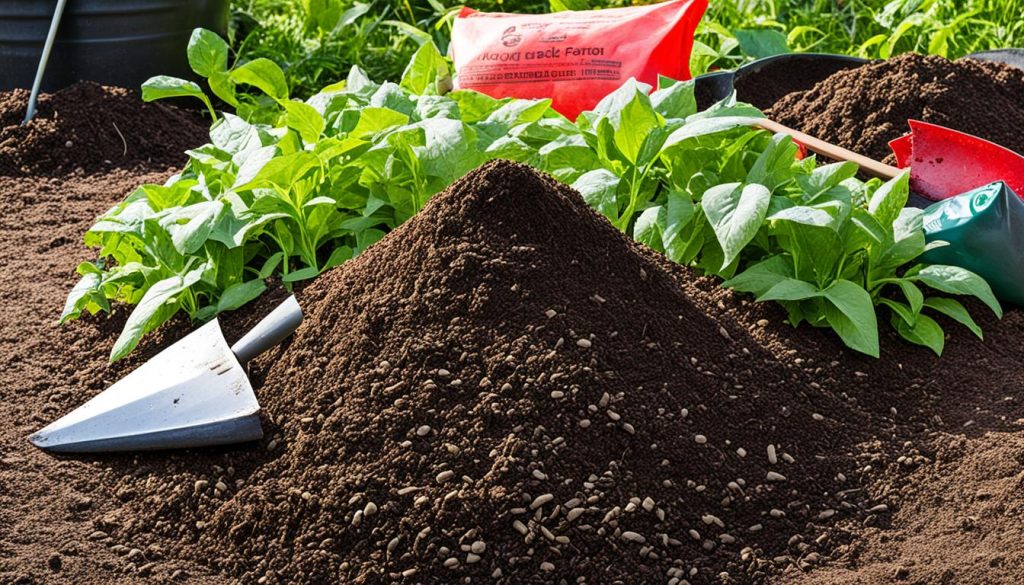
Roses do best in soil that’s a bit acidic to neutral and full of organic matter. Testing your soil before you plant is key. You’ll want to adjust it to make a perfect spot for your roses.
Soil Testing and Amendments
Getting a soil test tells you your soil’s pH and if it’s missing any nutrients. For roses, aim for a pH of 6.0 to 7.0. You can change the pH by adding compost, peat moss, or lime to make it higher. Or, use sulfur to lower it.
Don’t forget, adding organic matter also helps. Mix in 2 to 4 inches of compost, manure, or other organics. This improves how the soil holds water, drains, and its nutrient content. It means better food for your roses.
Look for fertilizers made just for roses. They should have nitrogen, phosphorus, potassium, and other important nutrients. Using these can make your roses healthier by giving them all the food they need.
| Soil Characteristic | Ideal Range for Roses | Amendments |
|---|---|---|
| pH | 6.0 to 7.0 | Lime (to raise pH), Sulfur (to lower pH) |
| Organic Matter | High | Compost, Peat Moss, Aged Manure |
| Nutrients | Balanced | Rose-Specific Fertilizer |
Preparing your soil well is important for the long-term health of your roses. It means less work later on.
Proper Rose Planting Techniques
Starting roses off right is key to a beautiful garden. Whether you choose bare-root or container roses, aim for strong roots and growth. By following easy steps, you can kickstart your roses’ health.
Preparing the Planting Hole
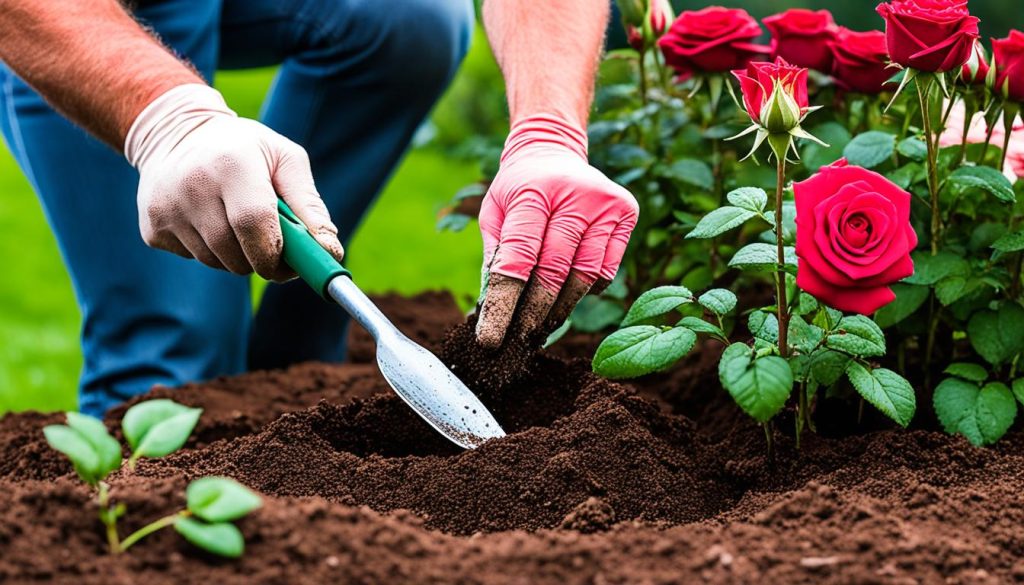
Make your hole big enough for the roots to fit well. The hole should be deeper than the roots and about twice as wide. Don’t let the roots tangle or bend.
Proper Planting Depth
In warm areas, the crown should be at ground level. In cold places, bury it 2-3 inches to shield it from the cold. This keeps the plant safe in winter.
Spacing Rose Bushes
Give each rose bush 3 feet of space for future growth. This prevents them from fighting for light and nutrients. Good spacing also keeps air flowing, which is key to avoiding plant diseases.
Backfilling the Planting Hole
After placing the rose, add soil mixed with compost. This boosts the soil’s nutrients. Pat the soil down gently, water well, and you’re all set.
With these how to plant roses tips, your roses should grow strong and healthy. This is the first step for them to thrive in your garden.
| Rose Planting Depth | Rose Planting Spacing |
|---|---|
| Ground level in mild climates, 2-3 inches below in cold regions | At least 3 feet apart |
How to Grow and Care for Roses in your Garden
Keeping roses healthy and beautiful needs care. But the beauty they bring makes it all worthwhile. For the best rose care, focus on fertilizing, watering, pruning, controlling pests, and managing diseases.
Feeding Roses for Lush Blooms
Roses love to eat and do well with a special rose fertilizer. Start feeding them in spring, when they show new leaves. Then feed after the first blooms. Use a fertilizer that has equal parts of Nitrogen, Phosphorus, and Potassium, or close.
Watering Roses Properly
Water is key for healthy roses. Newly planted ones need more water to grow strong roots. Give them 1-2 inches of water weekly. Once they’re settled, water your roses once or twice weekly, using 1-2 gallons. Always water the soil, not the leaves, to avoid diseases.
Pruning Roses for Shape and Health
Pruning your roses in early spring is vital. Cut away dead or hurt branches and shape the plant. Prune at a 45-degree angle right above a bud that faces out. This helps roses grow healthy and strong.
Controlling Pests and Diseases
Keep an eye out for aphids and powdery mildew or black spot. Act fast if you spot these pests or diseases. Use natural ways to fight them off. This will keep your rose garden thriving.
Rose care can be a joy when you follow these tips. You’ll enjoy a garden that’s full of life and color for years.
| Rose Type | Watering Recommendations |
|---|---|
| Shrub Roses | 1 gallon |
| Climbing Roses | 2 gallons |
| Rambling Roses | 2 gallons |
| Standard Tree Roses | 2 gallons |
| Roses in Pots | 1 gallon |
Harvesting and Enjoying Cut Roses
Growing roses allows you to cut fresh blooms for indoor beauty. Cut them in the morning or evening when well-hydrated. Use a sharp tool to cut the stems at a 45-degree angle right above a set of leaves. Make sure to avoid stem damage. Place the cut roses in a warm water-filled bucket until arranging them.
For long-lasting cut roses, use a floral preservative or make your own. Mix water with lemon or lime juice, sugar, and a bit of bleach. Change this solution every few days. Also, re-cut the stems. This will help your roses stay vibrant and beautiful. Following these steps, your cut roses can last for a week or even longer.
Keep your vases and containers clean to prevent a 20% reduction in vase life. A commercial cut garden rose is at least 12 inches long. Harvest roses below 80 degrees Fahrenheit for the best vase life. With care, you can make beautiful rose bouquets. This will highlight your garden’s beauty and freshen up your home.



Leave a Reply