

Ready to change your outdoor space into a beautiful oasis? Ornamental trees and shrubs are the secret. They make your garden look amazing with their lovely flowers and leaves. These landscaping plants can fill your space with color and life.
Want to make your home look more inviting, keep your living space private, or just enjoy pretty plants? You’re in the right place. This guide is full of tips to pick the best ornamental trees and shrubs. You’ll learn how to use flowering bushes and decorative foliage for a garden that’s a feast for the eyes.
Ornamental Trees for Versatile Plantings
Ornamental trees are key in any yard. They add height and color along with various growth styles. They are perfect for making a space pop or adding a simple, beautiful green touch.
Crapemyrtle: Vibrant Blooms and Various Sizes
Lagerstroemia trees, also known as crapemyrtles, bring a splash of color. They bloom in pink, lavender, red, and white from summer to fall. You can find them in sizes from 6 to 25 feet, fitting any space beautifully.
Japanese Maple: Shade-Loving Foliage Masterpieces
Japanese maples (Acer palmatum) are perfect for shade. They have detailed, lacy leaves in shades from light green to deep purple. They can reach up to 20 feet and are ideal for shady spots, adding beauty under larger trees.
Eastern Red Cedar: Drought-Tolerant Evergreen Screens
The Eastern red cedar (Juniperus virginiana) is great for privacy with its dense evergreen leaves. It can grow up to 30 feet tall. This tree’s blue-green to dark green foliage offers a hardy and versatile option for a natural privacy screen.
Ornamental trees add special looks to any yard. They come in many types fitting various needs beautifully. Whether you want color, shade, or privacy, the perfect ornamental tree will make your outdoor space a true delight.
Shrubs for Sunny Spots
Shady areas have charming plants, but sunny spots are great for some shrubs. These sun-loving Ornamental Shrubs bring vibrant colors, unique textures, and stunning displays to any yard.
Nandina: Colorful Foliage with Seasonal Interest
Known as “Heavenly Bamboo,” Nandina is quite versatile. It changes colors beautifully each season. Its green leaves turn to red, orange, or burgundy. Nandina is great for borders, foundations, or mixed beds in sunny areas. This is because of its neat growth and bamboo-like look.
Indian Hawthorn: Early Spring Blooms in Various Heights
Indian Hawthorn loves the sun and blooms plentifully in early spring. It comes in different heights and shapes which work for many landscapes. Its soft pink or white flowers are lovely. They stand out against glossy, evergreen leaves. This shrub loves the sun.
Looking for color or seasonal interest? These sun-loving Ornamental Shrubs are perfect for sunny gardens.
Ornamental Trees and Shrubs
Ornamental trees and shrubs play a big part in beautiful landscapes. They come in many shapes and colors. From Japanese maples with their bright leaves to crapemyrtles that burst with flowers, you can pick plants that fit your garden.
Most Ornamental Trees are small to medium-sized. They usually grow to 25-30 feet or shorter. They’re perfect for adding beauty to city or suburban areas. Larger shade trees, on the other hand, offer more coverage and are great for keeping your home cool.
Choosing the right tree is important. Think about how much space you have and what type of tree you prefer. It should also match the soil and sunlight in your garden. With the right choice, your garden will look great and thrive.
| Ornamental Tree Variety | Height Range (feet) | Width Range (feet) |
|---|---|---|
| ASPEN, QUAKING | 40-50 | 20-30 |
| BEECH, TRICOLOR | 25-30 | 18-25 |
| BIRCH, ROYAL FROST | 30-40 | 15-20 |
| CHERRY, CANADA RED | 20-30 | 15-20 |
| DOGWOOD, KOUSA | 25 | 25 |
| IRONWOOD | 20-40 | 20-40 |
| MAPLE, CUTLEAF JAPANESE | 10 | 15 |
| MULBERRY, WEEPING | 10-15 | 10-12 |
| REDBUD, EASTERN | 25 | 25-35 |
| REDWOOD, DAWN | 70-100 | 25 |
| SMOKEBUSH, ROYAL PURPLE | 15 | 12 |
| STEWARTIA, JAPANESE | 15-30 | 20-25 |
Urban gardens need more care than big trees. Proper pruning keeps them healthy and looking their best. The right techniques depend on the tree’s type and your garden’s conditions.
Winter is a great time to prune most trees. But, some need special care so check before you cut. Shaping shrubs in spring helps them grow back healthy. Different plants need pruning at different times, so pay attention to their blooming seasons.
Shade-Loving Shrub Selections
Not all ornamental plants thrive in full sun. Some need partial or full shade to really grow. Hydrangeas are a great example. They bring beautiful blooming shrubs in different colors that look great in shade. Mahonia has striking foliage plants and does well in shade too. These shade-tolerant shrubs can brighten up shady spots in your outdoor area.
Hydrangea: Blooming Beauties in Various Forms
People love hydrangeas for their blooming shrubs that do well in Zones 4a to 8b of the USDA. You can get them in many forms, from mopheads to lacecaps. The color of their blooms changes with the soil pH, going from blue to pink. They can be small, like 3 feet x 3 feet, or very tall and wide, up to 16 feet tall x 13 feet wide. This makes them perfect for many uses in your garden.
Mahonia: Bold Foliage with Unique Textures
Mahonia or Oregon grape holly stands out with its big, tough leaves and yellow flowers. It’s a foliage plant that likes Zones 5 to 9. This shade-tolerant shrub is great for adding something special to shady spots. Mahonia grows 3 to 6 feet tall and 2 to 6 feet wide. You can use it as a stand-alone plant, in hedges, or for a pop of year-round interest.
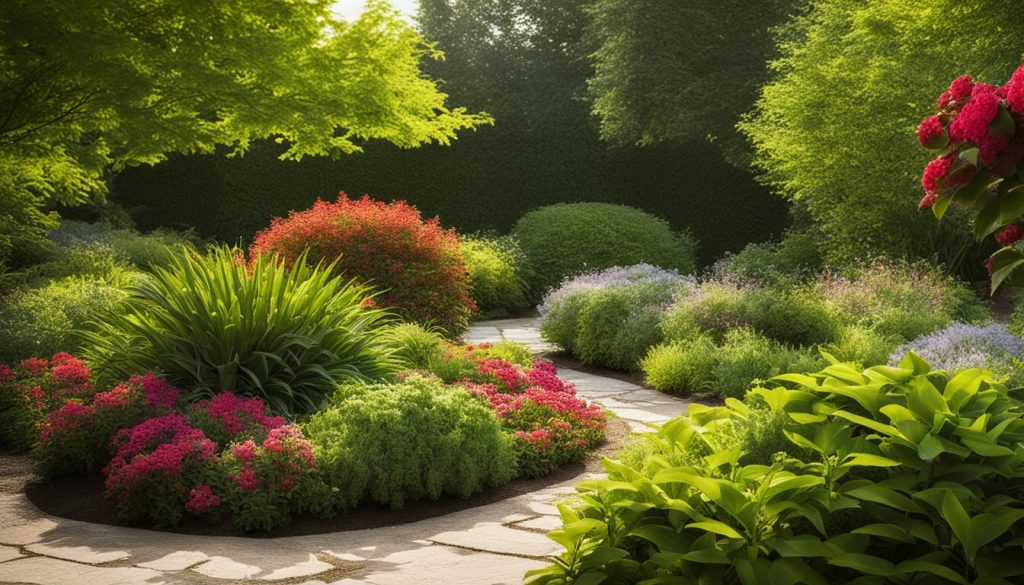
If you want to add color or bold texture to your shady garden, look no further. These wonders, from hydrangeas to Mahonia, are perfect for less sunny places. They make even the dimmest parts of your garden shine.
Low-Maintenance Evergreen Shrubs
Looking for an easy way to keep your garden green all year? Consider low-maintenance evergreen shrubs. Junipers stand out because they come in many shapes and sizes. They work well for both covering the ground and creating privacy. Plus, they don’t need a lot of attention to stay healthy.
Juniper: Diverse Groundcovers and Upright Forms
Junipers are part of the Cupressaceae family. This means they are a group of evergreen shrubs that are easy to care for. They vary from low, sprawling plants to tall, column-like shapes. You can find a juniper for almost any landscaping need. They grow well in most U.S. climates, from zone 2 to 7, which is great for busy people who love their gardens.
| Juniper Variety | Growth Habit | Mature Size | Hardiness Zones |
|---|---|---|---|
| Juniperus horizontalis | Groundcover | 1-2 ft. tall, 6-8 ft. wide | 3-9 |
| Juniperus communis | Upright | 15-40 ft. tall, 10-20 ft. wide | 2-7 |
| Juniperus procumbens | Groundcover | 6-12 in. tall, 6-8 ft. wide | 4-9 |
Junipers are great if you’re looking for plants that are low-maintenance and green all year. They can handle various temperatures and need little looking after. This makes them a top choice for many gardeners and homeowners.
Ornamental Grasses: Living Sculptures
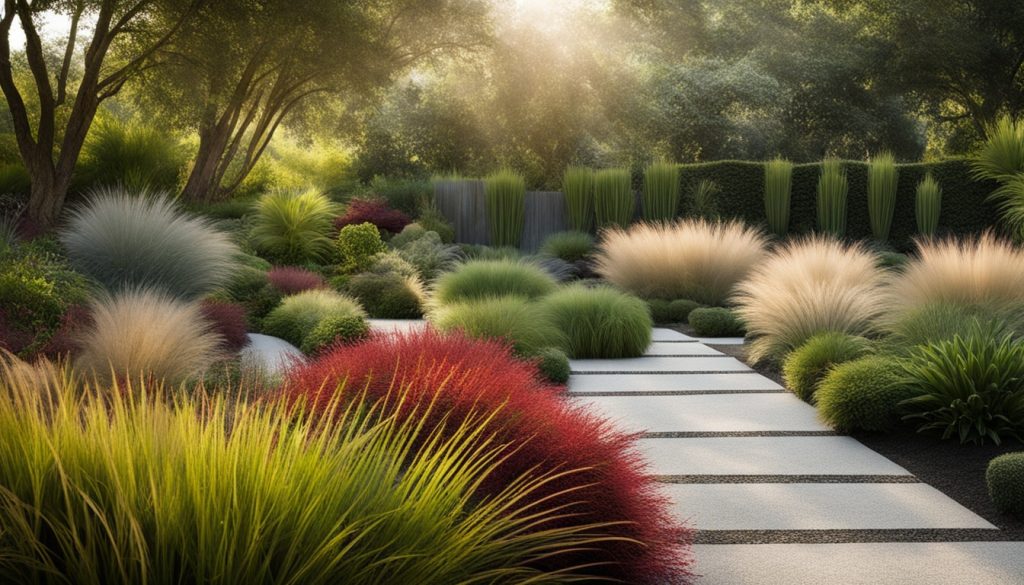
Ornamental grasses are not just plants. They are living sculptures that enrich any area with their beauty. They come in a variety of colors and sizes. For example, the light plumes of Pennisetum alopecuroides or the tall Stipa gigantea are stunning.
These grasses bring movement and rhythm to your garden. As they gently sway, they create a calming dance. This dance makes your garden feel in tune with nature. Ornamental grasses can be used in many ways. They make areas stand out, soften borders, or flow over walls. No matter how they’re used, they add a special focus to gardens.
The charm of these grasses goes beyond their looks. Many can withstand drought and require very little work. This makes them perfect for areas where water is scarce. Varieties like Carex ‘Everillo’ or Blue Fescue keep their bright colors despite heat. Grasses like Japanese Forest Grass or Melinus Nerviglumis ‘Pink Crystals’ do well in the shade.
Choosing the right ornamental grass is important. Some, like Mexican Feather Grass, might take over your garden. It’s essential to pick those that behave and don’t cause trouble. Responsible choices make your garden better without harm.
A well-chosen ornamental grass can truly change a place. It adds life, flow, and a touch of nature’s grace. With their adaptable and easy-to-care-for qualities, they’re ideal for creating beautiful and peaceful outdoor scenes. These living sculptures are a great find for anyone who loves to design outdoor spaces.
Selecting the Perfect Plants
Choosing the right trees and shrubs for your yard needs careful thought. You should think about how big they get, when they bloom, and how much sun they like. For instance, Japanese maples love some shade. On the other hand, crapemyrtles and nandinas do best in full sunlight.
It’s key to look at each plant’s eventual size and when it will show off the most color. This can help you plan a beautiful garden that fits your vision and the area’s climate.
Considering Growth, Bloom Time, and Sunlight Needs
Ornamental trees usually stay under 30 feet tall and wide. In contrast, shade trees can tower over 30 to 60 feet, or even more. Your local hardiness zones will guide you to trees that survive the winter in your area. And think about the soil—some trees love sandy dirt, while others do well in clay.
Regarding sunlight, some trees need full sun all the time. Others do fine with less light. With new plant varieties, the old rules about shade and sun trees sometimes don’t fully apply. So, research is vital before picking a plant.
- Ornamental trees are generally small, maturing at less than 30 feet tall and 10 to 20 feet wide.
- Shade trees are considered large, usually growing 30 to 60 feet or more tall and wide.
- Hardiness zones help narrow down tree choices to those that can survive winters in a specific area.
- Some trees thrive in loose, sandy soil, while others tolerate heavy clay soil.
- Many trees require all-day sun for optimal growth, while some thrive in dappled shade.
- Plant breeding has led to exceptions within the traditional categories of ornamental and shade trees.
Picking the best tree means looking at its size, where it goes, how it grows, and if it’s interesting year-round. Thinking about its role in your garden is crucial. And don’t forget, the cost and time you’ll spend on your tree is a big deal.
Choosing plants is like hiring based on a resume. Most trees and shrubs stay in your garden for a long time. So taking time to learn about their features pays off. You’ll make a gorgeous and lasting outdoor space.
Creating Captivating Combinations
The true magic of ornamental trees and shrubs is in how you combine them. Mixing plants with matching Ornamental Tree and Shrub Combinations, textures, and growth styles can make your Landscape Design look truly fascinating. For instance, a Japanese maple’s fine, lacy leaves pop against a mahonia’s thick, evergreen ones. On the other hand, a juniper’s steady green can boost a crapemyrtle’s bursts of color.
Try out varied Complementary Plants to build a landscape that’s not just beautiful but just right for your outdoor space. Contrasting Textures and Colors can make a garden that’s lively and in balance. Each part works well with the other, making everything look complete and engaging.
Whether you love the bright colors of a crapemyrtle or a Japanese maple’s tasteful grace, there are so many ways to make magical plant pairings. Using each tree and shrub’s special traits, you can craft a garden that’s a joy to see. It’ll make your outdoor living area even more wonderful.



Leave a Reply